
How to Choose the Right 304 Stainless Steel Kneading Board for Bakery & Home Use
Discover how to select the ultimate 304 stainless steel kneading board for commercial bakeries and home kitchens. Compare material hygiene, L-fold counter lip stability, and custom OEM sizing options.
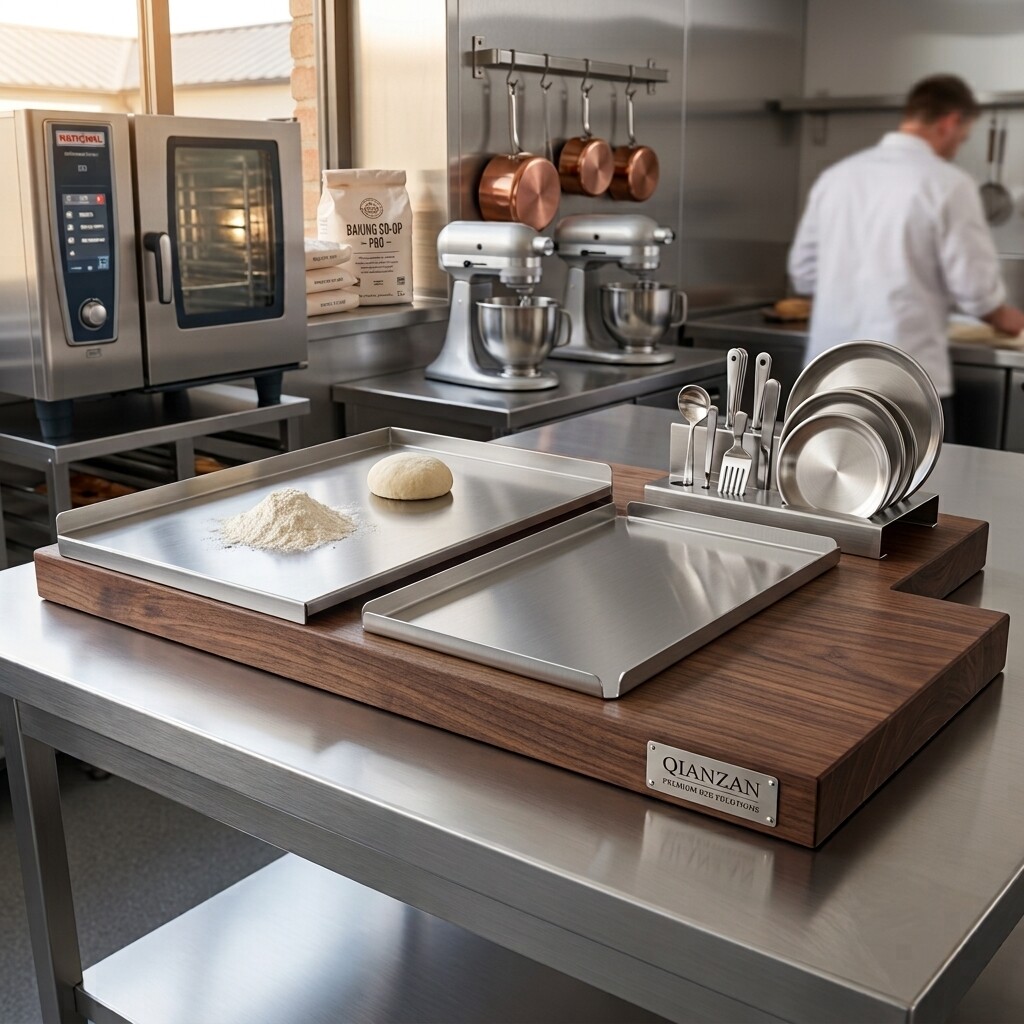
When it comes to commercial bakeries, pizzeria prep kitchens, and high-end home baking, selecting the right prep surface directly impacts efficiency, food safety, and product quality. Traditional wooden cutting boards can absorb moisture and breed mold, while plastic boards often warp and scratch easily.
Food-grade SUS 304 stainless steel kneading boards have become the industry standard. Here is a comprehensive guide to choosing the ideal board for your kitchen or distribution product line.
1. Material Grade: Why 304 Stainless Steel is Essential
Not all metal boards are created equal. When sourcing stainless steel prep tables or pastry boards, ensure the material is authentic SUS 304 food-grade stainless steel:
100% Non-Porous & Antibacterial: Unlike wood or bamboo, 304 stainless steel leaves zero microscopic pores for bacteria, yeast, or flour residue to hide, ensuring total hygiene between batches.
Corrosion & Rust Resistance: Withstands frequent washing, dough moisture, and citrus/vinegar contact without rusting or degrading over time.
Cool Surface for Pastry Work: Metal naturally holds a cooler surface temperature, making it optimal for working with buttery pastry dough and sourdough.
2. Key Structural Features to Look For
To maximize stability and work surface cleanliness during intensive kneading, pay close attention to two critical design elements:
Non-Slip L-Fold Counter Lip: A downward L-shaped fold on one side hooks securely over the edge of your countertop or prep table. This physical barrier stops the board from sliding forward or shifting under heavy force.
Perimeter Recessed Juice & Flour Groove: A precision-engineered groove along the perimeter traps excess flour, liquid, or oil, keeping your kitchen counter clean and reducing prep time.
3. Selecting the Right Thickness & Dimensions
Matching the board specifications to your operational volume is vital for long-term durability:
Standard Sizes: Common market dimensions include 40x30 cm for compact kitchens, 60x50 cm for versatile baking stations, and 80x50 cm for commercial prep lines.
Material Thickness: 1.5mm provides lightweight durability for standard home and light commercial use, while 2.0mm offers heavy-duty structural rigidity for industrial bakery environments.
4. Partnering with a Reliable B2B OEM Supplier
If you are a wholesale distributor, restaurant supplier, or Amazon brand owner, finding a manufacturing partner that offers flexible OEM services is crucial. Look for suppliers providing custom laser-etched logos, bespoke dimensional sizing, protective export packaging, and competitive DDP shipping terms.
Explore Our Flagship Commercial Solution
Looking for a premium, heavy-duty kneading board engineered with an L-fold lip and juice groove?
👉 Click Here to View Our 304 Stainless Steel Kneading Board Product Details & Bulk Wholesale Pricing
Written by
Qianzan Kitchenware Editorial Team
Supply chain insights for global B2B partners
Ready to Source Premium Kitchenware?
Download our 2026 Product Catalog or request OEM/ODM samples tailored to your brand requirements.